
El Ritmo Interno

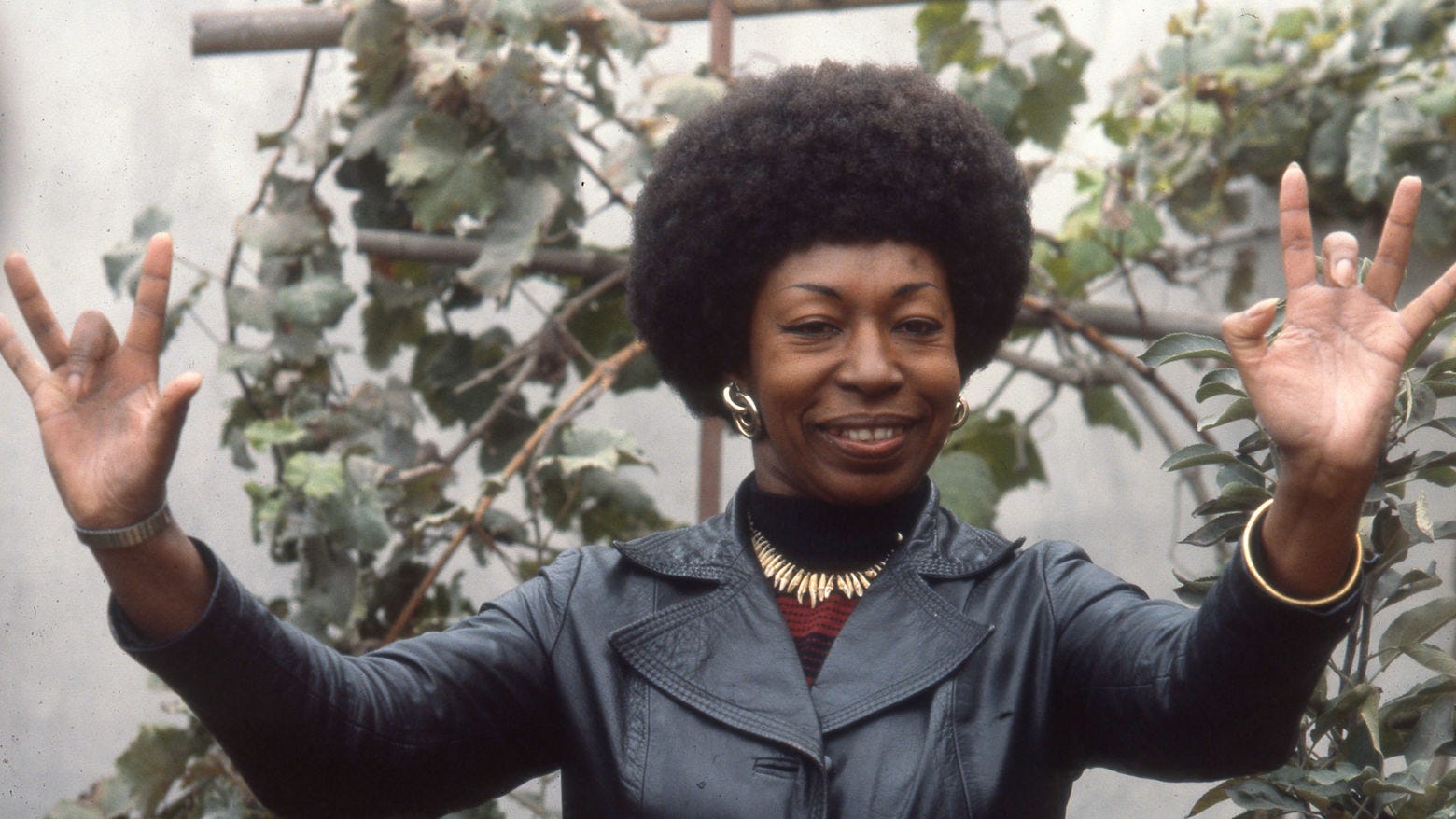
A photograph of Victoria Santa Cruz, iconic Afro-Peruvian choreographer, composer, scholar, poet, artist, dancer, professor and activist.
Soy hija de la diaspora Peruana. I’ve spent my entire life looking for ways to refract my homeland’s image into my life. Sometimes this means scraping spoonfuls of aji panca onto potatoes. Other times it means taking in the decorations at a pollería, searching for clues to my heritage. Eyes scanning to see a tumi glinting above the plastic covered tabletops, an alpaca tapestry hung across from a fridge full of Inca Colas and overpriced chicha morada.
As a way of reconnecting with my Peruvian heritage, I decided to delve deeper, on a physical and spiritual level through dance.
What does memory and remembrance of ancestors look like through movement?
I began taking folkloric Afro Peruvian dance classes last year through Kaypacha Dance. My dance teacher and mentor, Cynthia Paniagua, has spent her life dedicated to using dance as an expression of resistance. She has traveled throughout Peru and studied bailes folkloricos with los maestros.
Cynthia created a program called “Dance Your Ancestors,” a dance program that connects Peruvians in the diaspora to their roots. Through this program, I took weekly dance classes with other Peruvians from the diaspora. Cynthia guided us to delve deep into the history of Afro Peruvian dance by providing books, articles and videos.
When Cynthia had us watched Victoria Santa Cruz’s performance of her poem, “Me Gritaron Negra,” I felt the hair follicles on my peluda self stand up in a 90 degree angle. A fuzzy salute if you will.
Victoria Santa Cruz is the definition of indignity and rebellion. She knows her Blackness is vilified by society, but her words are a reclamation, an invocation; “Negra soy!”
Victoria Santa Cruz is often not given the limelight as the face of Musica Afroperuano or Musica Criolla.
For example, I grew up listening to Chabuca Granda, while an immeasurably talented singer and artist, is typically given the limelight instead. Chabuca Granda was born in Apurimac, Peru. Chabuca would not look out of place standing next to Julie Andrews or Doris Day, with her light brown bob.
It is Chabuca Granda’s light-skinned face that has a permanent mural in Barranco, a historic neighborhood in Lima. While she sung “Puente de los Suspiros,” about the picturesque bridge in Barranco, there is not an equal public recognition of Victoria Santa Cruz given in Peruvian society. Largely, the legacy and power of Afro-Peruvian women in Peru is still vastly unrecognized and ignored.
There is still a persistence of toxic racism and colorism within much of Peruvian society, both domestically and within the diaspora. I’ve heard the echoes of the values of Spanish Colonization heard through other Peruvians’ voices when they urge others to date light skinned, white or white passing people to “mejorar la raza.”
Victoria believed that our bodies held ancestral memory. She was able to harness the power of ancestral memory to choregraph traditional Afro-Peruvian dances, such as festejo, zamacueca, and lando that were being erased to time.
When reading Victoria’s book, “Ritmo, El Eterno Organizador,”I was struck by her belief that everyone, without exception had an internal rhythm, and could find their internal rhythm if only they were in tune with their bodies.
I read décimas, ten line stanza poems from Nicomedes Santa Cruz and reflections by Susana Baca. It was through reading these texts from Afro Peruvian artists, dancers, and historians that I learned that sheer resistance behind the movements in Afro Peruvian dance.
For context, Spanish Colonization created the enslavement of Africans in Peru. The Spanish sought to control the bodies of the Africans they enslaved, by any means necessary, through physical abuse, rape, and cruel punishments. Any kind of movement was controlled by the Spanish, including dance.
Afro Peruvian dances, such as Festejo, were banned, along with drums. Drums were seen as threats to the Spaniards’ authority, because drum rhythms are a means of communication.
There is no Festejo without the free-flowing movement of the hips and pelvis. The Spanish were incapable of seeing the movements of the hips and pelvis as anything but sexual and lewd. Specifically, Spaniards saw the movements of Afro Peruvian dances to be contrary to their ideals of Catholicism.
The emphasis of pelvic and hip movements in Afro Peruvian dance comes from the connection to fertility rituals. Many Afro Peruvian dances center on the womb, as a celebration and reclamation of fertility both of the womb and that of the land. The hip movements in Afro Peruvian dance create a figure eight, an infinity loop.
The infinity loop, el infinito, reflects the power that women have to birth the next generation, and to keep the cycle of life in perpetuity.
There is so much resistance in the movement of the infinito. The infinito is an assertion of personal power and autonomy.
I’ve been thinking about how when I began dancing Festejo, my hips were in some serious need of WD-40. I was stuck. I couldn’t finish the infinito, my hips were locked. More on that later…
p.s. Please continue to email you Representatives and Senators to Support a Ceasefire in Palestine.
With love,
-Marisol